

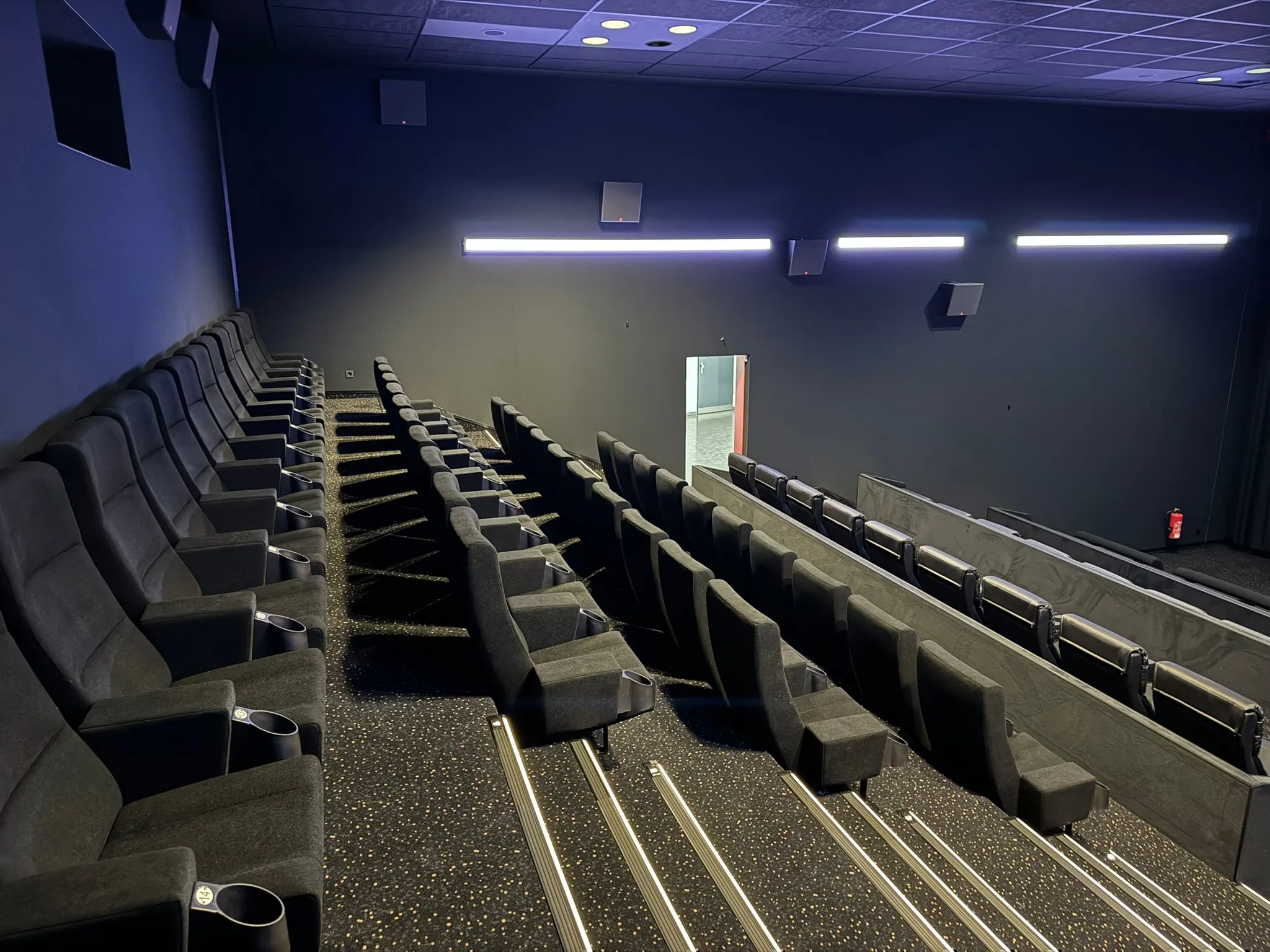
Cinema Seating for Immersive Viewing
Cinema environments are built around one core objective: immersion. Every element inside a theatre contributes either positively or negatively to how deeply the audience connects with what happens on screen. Cinema seating is one of the most influential of these elements, shaping posture, comfort, focus, and the overall rhythm of the viewing experience.
In professional cinema projects, seating is not treated as furniture. It is approached as a performance component that must operate reliably, quietly, and consistently throughout every screening.
Cinema Seating as an Experience Anchor
Once seated, the audience remains physically connected to the chair for the entire duration of the film. This makes cinema seating the primary physical interface between the viewer and the space.
Well designed cinema seating supports
Stable body positioning throughout long screenings
Reduced physical awareness that could distract from the film
A sense of personal space within shared environments
When seating performs correctly, the viewer forgets the seat and focuses entirely on the screen.
Supporting Long Duration Viewing
Films often require sustained attention over extended periods. Seating must therefore maintain comfort without encouraging excessive movement or fatigue.
Cinema seating developed for long duration use focuses on
Balanced back support
Appropriate seat depth for natural posture
Controlled seating angles that reduce strain
The objective is comfort that remains consistent from opening scene to final credits.
Spatial Planning and Seating Layout
Cinema seating influences how space is organized and how audiences move within the theatre. Layout decisions affect circulation, accessibility, and visual order.
Effective cinema seating layouts contribute to
Clear and predictable aisles
Efficient use of seating capacity
Orderly audience movement before and after screenings
Seating becomes a structural element that supports both experience and operation.
Durability Under Repeated Use
Commercial cinemas operate on daily schedules with high seat turnover. Seating systems must withstand repeated use without losing stability or comfort.
Durable cinema seating solutions rely on
Strong internal frameworks
Materials resistant to deformation
Construction methods that maintain alignment over time
Durability ensures uninterrupted operation and preserves the quality of the theatre environment.
Quiet Performance in the Cinema Environment
Sound control is critical in cinemas. Seating must operate silently and remain stable to avoid unwanted noise during screenings.
Professional cinema seating is designed to
Minimize movement related noise
Remain stable during seating adjustments
Avoid mechanical sounds that disrupt immersion
Silence is as important as comfort in supporting the cinematic experience.
Visual Discipline and Theatre Atmosphere
Cinema seating occupies a large portion of the visual field inside the theatre. Its form and arrangement influence how cohesive and intentional the space feels.
Visually disciplined seating design supports
Clean and orderly appearance
Consistent repetition across rows
Focus on the screen rather than the surroundings
Visual restraint allows the architecture and film content to take precedence.
Adaptability Across Cinema Concepts
Modern cinemas host a variety of formats, from standard screenings to premium experiences and special events. Seating systems must support these variations without compromising performance.
Adaptable cinema seating solutions allow
Use across different theatre concepts
Consistent comfort regardless of format
Long term relevance as cinema models evolve
Adaptability is achieved through thoughtful design rather than complexity.
Operational Efficiency and Maintenance
Beyond audience experience, cinema seating affects daily operations. Cleaning, inspection, and maintenance all depend on how seating is designed and installed.
Well planned seating systems support
Efficient cleaning routines
Easy access for maintenance
Reduced downtime between screenings
Operational efficiency contributes directly to long term sustainability.
Cinema Seating as a Long Term Investment
Cinema seating is evaluated over years of continuous use. Decisions made during selection and planning have lasting impact on performance and operating costs.
A long term perspective prioritizes
Reliable performance over time
Stable comfort levels
Reduced need for replacement
Seating becomes a durable asset rather than a recurring concern.
The Invisible Contribution of Good Seating
The success of cinema seating is rarely noticed explicitly. Its impact is felt through absence of discomfort, distraction, or disruption.
When cinema seating performs at a high level, it
Supports uninterrupted immersion
Maintains audience comfort quietly
Reinforces the overall quality of the theatre
Conclusion
Cinema seating is a fundamental component of immersive viewing environments. It supports comfort, focus, and operational reliability while remaining visually and acoustically restrained.
When designed with performance, durability, and long term use in mind, cinema seating becomes an invisible but essential contributor to successful cinema experiences.
Created By : Simko Cinema Seating